See Intelligence in Action:

Making the Physical World Machine-Readable.

Harry Marshall

Jan 3, 2026

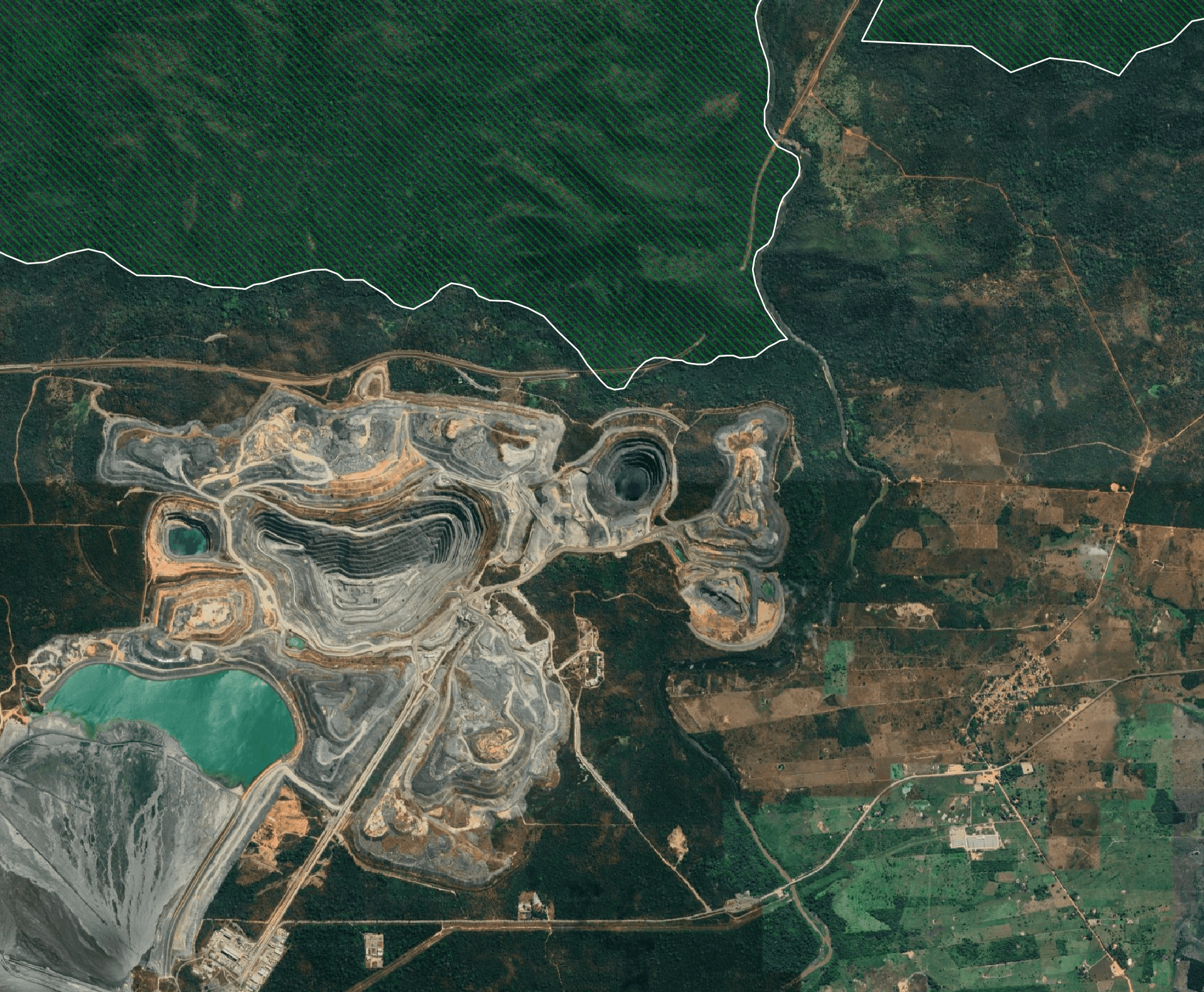
Every supply chain decision is anchored to a place. Farms, factories, ports, forests, mines. Yet for most companies, location data sits outside their core systems. It exists as maps, PDFs, or specialist tools. It rarely informs day-to-day decisions.

Remote sensing should have closed this gap. Instead, the industry fractured.

Generalist Earth observation engines expose powerful data but require teams to design analytics from scratch, maintain pipelines, and interpret results manually. Insight stays locked in maps. Scale depends on expertise.

At the other extreme, single-purpose tools solve one narrow problem, often using expensive data that does not scale or adapt as risks change.

Most companies choose a third path. They avoid geospatial analysis altogether. Risk is transferred through insurance, audits, or absorbed after failure. Location remains a blind spot.

None of these approaches integrate into how modern companies actually operate.


OpenAtlas is built on a simple but uncompromising idea:

Location data in. Real-world complexity processed. Machine-readable, integration-ready data out.

Remote sensing should behave like enterprise infrastructure, not a specialist workflow. Analytical complexity must be hidden but auditable. Outputs must flow directly into procurement, compliance, risk, and decision systems.

To make this possible, three elements must work as one system.

Scalable processing that handles enterprise volumes without bespoke pipelines.

Composable analytical models that share infrastructure and can be built, combined, and improved quickly.

Standardized outputs that integrate cleanly into existing tools. Tables, confidence scores, timestamps, jurisdictions. Not dashboards that require interpretation.

These elements are inseparable. Together, they create a continuous loop. Monitor the physical world. Validate signals. Improve models. Feed decisions. Repeat.

Recent posts

Recent posts

Recent posts

Latest from us

From Words to Worlds: Spatial Intelligence is AI’s Next Frontier

Large language models have transformed how we work with abstract knowledge. Yet they remain wordsmiths in the dark; eloquent but inexperienced, knowledgeable but ungrounded. Spatial intelligence will transform how we create and interact with real and virtual worlds. [by Fei-Fei Li]

Read article

From Words to Worlds: Spatial Intelligence is AI’s Next Frontier

Large language models have transformed how we work with abstract knowledge. Yet they remain wordsmiths in the dark; eloquent but inexperienced, knowledgeable but ungrounded. Spatial intelligence will transform how we create and interact with real and virtual worlds. [by Fei-Fei Li]

Read article

From Words to Worlds: Spatial Intelligence is AI’s Next Frontier

Large language models have transformed how we work with abstract knowledge. Yet they remain wordsmiths in the dark; eloquent but inexperienced, knowledgeable but ungrounded. Spatial intelligence will transform how we create and interact with real and virtual worlds. [by Fei-Fei Li]

Read article

From Words to Worlds: Spatial Intelligence is AI’s Next Frontier

Large language models have transformed how we work with abstract knowledge. Yet they remain wordsmiths in the dark; eloquent but inexperienced, knowledgeable but ungrounded. Spatial intelligence will transform how we create and interact with real and virtual worlds. [by Fei-Fei Li]

Read article

The Defense Paradox in Earth Observation: The Enabler and the Hindrance

Why the sector's biggest customer prevents its biggest market and what unlocks the transition [by Aravind Ravichandran]

Read article

The Defense Paradox in Earth Observation: The Enabler and the Hindrance

Why the sector's biggest customer prevents its biggest market and what unlocks the transition [by Aravind Ravichandran]

Read article

The Defense Paradox in Earth Observation: The Enabler and the Hindrance

Why the sector's biggest customer prevents its biggest market and what unlocks the transition [by Aravind Ravichandran]

Read article

The Defense Paradox in Earth Observation: The Enabler and the Hindrance

Why the sector's biggest customer prevents its biggest market and what unlocks the transition [by Aravind Ravichandran]

Read article